
Camping in the Whitsunday Islands starts with access
Camping in the Whitsunday Islands is a self-sufficient island stay. Arrange a suitable boat passage before committing to a campsite, then book and pay for the site before arrival. Transport and the camping permit are separate arrangements. Your choice needs to work in both directions: reaching a beach with equipment and water is only half the plan, because the return collection also has to be organised.
Private or commercial boats provide access to Whitsunday and Hook islands from Airlie Beach or Shute Harbour. Match the landing and collection arrangements to your chosen site instead of treating the ordinary ferry network as a connection to every island. The arrival guide explains the airports and mainland boat departure points. Allow room in the wider itinerary for weather delays, particularly before an onward flight.
Permits, fees and the visible booking number
Keep your emailed permit available and display the booking number at the camp. Sites have limited capacity, so the booking is part of the preparation rather than a formality completed after landing. The standard fee recorded on 5 November 2026 is AUD 7.75 per person per night or AUD 31 per family per night; children under five stay free.
For this tariff, a family means one or two adults with children under 18, up to eight people in total. Keep the camping fee separate from the boat fare and any other applicable charges. The normal campsite tariff is not a total expedition price, and the dedicated Ngaro Track booking has its own arrangements. Plan your budget around the specific route and transport rather than multiplying the nightly permit alone.
Choosing an island location
The park’s camping locations include sites on Whitsunday, Hook and Henning islands. Select a location by whether your boat arrangements can serve it, how much equipment you can carry and the current site information. Facilities vary by location; bring supplies for self-sufficiency rather than relying on shops, power, showers or a drinking-water tap.
The national park guide helps put the island locations and walking options in context. If you prefer a room or a crewed sailing trip, compare the alternatives in where to stay. An overnight sailing tour provides nights aboard its boat; it is a different booking from an island campsite and should not be used as an assumed transfer for camping equipment.
Water, food, cooking and waste
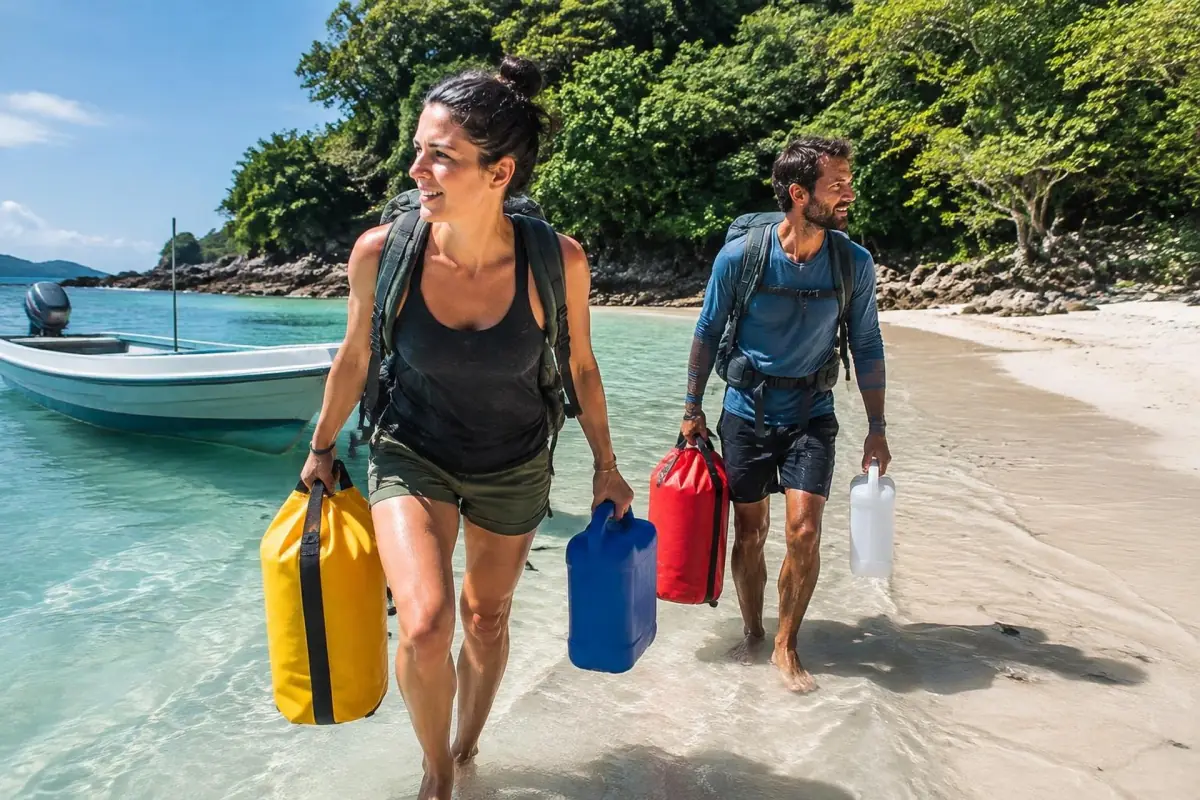
Bring at least five litres of fresh water per person per day, including the water used for cooking and washing. Count those uses alongside drinking when organising containers and boat loading. Bring your own food, insect protection and first-aid supplies. Pack for the return journey as carefully as the outward one, because all rubbish must go back to the mainland with you.
Open fires, ash-producing stoves and generators are prohibited on national park islands and adjoining tidal areas. Use a gas or fuel stove that meets the park rules. Keep cooking equipment and provisions part of your own camping plan. Pets are not allowed on national park islands or their beaches, and drones are prohibited in QPWS camping areas. These restrictions apply even when a campsite feels remote or quiet.
The Ngaro Track is a separate journey
The new Ngaro Track is a demanding 32 km one-way walk with an indicative three-day, two-night itinerary and a dedicated booking system for April to October. Boat transfers are separate. Tank water along the track must be treated before drinking, and additional water may be necessary after low rainfall. Existing short walks do not use the full-track booking.
The older Ngaro Sea Trail combines walking on three islands with boat or kayak travel between them. It is not one continuous footpath. Choose the intended route before booking overnight arrangements so that your campsite, transport and walking plan describe the same journey. Do not use a normal campsite booking as a substitute for the dedicated multi-day track reservation.
Camping at Whitehaven and planning safely
For the beach-specific setting, read Whitehaven Beach and Hill Inlet. Safety guidance reviewed on 5 November 2026 warns that island mobile reception is unreliable, with no mobile coverage at Whitehaven or Tongue Point. Leave your route with a reliable contact and plan appropriate communication, weather reserves and first aid; assistance may be hours away.
National park beaches have no lifeguards. Stingers, sharks, crocodiles and tidal currents are year-round risks, and Cid Harbour is not a swimming location. Use current weather warnings and park alerts for the actual trip. The season planning guide helps with the broader choice of dates, while current conditions determine the decision about a boat passage or water activity.
Questions about your visit
Can I arrange my permit after reaching the campsite?
Book and pay before arrival, keep the emailed permit available and display the booking number at camp. Organise suitable boat passage before committing to the campsite.
How much water should I carry?
Allow at least five litres of fresh water per person per day, including cooking and washing. The requirement covers more than drinking alone, so include all uses in your loading plan.
Does a sailing tour deliver campers?
Overnight sailing is accommodation aboard a boat. For an island campsite, organise a separate camping permit and a boat service agreed for your landing, equipment and collection.